
Setting Up a Wooden Toy Corner at Home or Nursery in Qatar
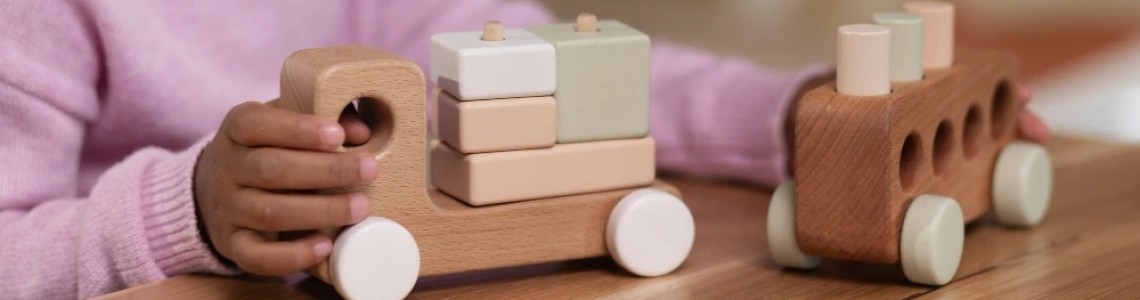
Creating a well-structured wooden toy corner is not just about play—it’s about designing a purposeful learning environment. For educators and teachers in Qatar, a thoughtfully planned toy corner can support early childhood development, classroom management, and curriculum goals.
This guide is tailored specifically for schools, nurseries, and early learning centers, helping you build a functional, safe, and educational wooden toy space.
Why Wooden Toys Work Best in Educational Settings
Wooden toys are widely used in modern classrooms due to their learning-focused benefits.
For educators, they offer:
-
Open-ended learning: Encourages creativity, problem-solving, and imagination
-
Durability for classroom use: Ideal for high-traffic environments
-
Reduced overstimulation: Neutral tones help maintain focus
-
Curriculum alignment: Supports Montessori and play-based learning methods
They are especially effective in early years education (EYFS, Montessori, and Reggio Emilia approaches) used across Qatar.
Choosing the Right Space in a Classroom or Nursery
In a classroom, the toy corner should be part of a structured learning environment, not random placement.
Best practices for teachers:
-
Allocate a dedicated learning zone within the classroom
-
Keep it visible for easy supervision
-
Ensure smooth movement between activity areas
-
Use layout zoning (play, reading, sensory learning)
Pro tip: Place the toy corner near a quiet learning area to encourage focused play rather than chaotic activity.
Key Components of an Effective Wooden Toy Learning Corner
1. Open, Child-Accessible Shelving
-
Promotes independence and self-selection
-
Helps children develop responsibility
2. Structured Toy Categories
Organize toys based on learning outcomes:
-
Cognitive skills: puzzles, sorting toys
-
Motor skills: blocks, stacking toys
-
Role play: kitchen sets, tool kits
-
Sensory learning: textured toys
3. Child-Sized Furniture
-
Supports correct posture and comfort
-
Enables group activities and collaboration
4. Rotational Toy System
-
Avoid overwhelming children
-
Introduce new challenges periodically
Safety & Classroom Management Considerations
For educators, safety and control are critical.
Classroom safety tips:
-
Use rounded-edge wooden furniture
-
Avoid overcrowding the area
-
Maintain clear pathways for supervision
-
Regularly inspect toys for wear and tear
Classroom management tip:
Set clear rules like:
-
“Take one toy at a time”
-
“Return after use”
This builds discipline while maintaining an organized environment.
Enhancing Learning Outcomes Through Play
A wooden toy corner should directly support your teaching objectives.
Ways teachers can integrate it into lessons:
-
Use blocks for basic math concepts (counting, shapes)
-
Introduce role-play for social and language development
-
Combine toys with storytelling sessions
-
Encourage group play to build teamwork
This approach turns playtime into structured learning experiences.
Adapting for Nurseries and Educational Centers in Qatar
For Nurseries:
-
Focus on sensory and motor skill development
-
Use simple, safe, and large-sized toys
For Schools & Learning Centers:
-
Introduce more complex problem-solving toys
-
Align toy selection with curriculum goals
-
Create multiple learning stations
Qatar’s education sector increasingly emphasizes interactive, child-led learning, making wooden toy corners a valuable addition.
Conclusion
For educators and teachers in Qatar, a wooden toy corner is more than a play area—it is a powerful learning tool. When designed strategically, it enhances engagement, supports curriculum goals, and creates a structured yet creative classroom environment.
Play and Learn Qatar provides high-quality wooden toys and classroom play solutions tailored for nurseries, schools, and early learning centers. Their products are designed to support safe, structured, and engaging educational environments across Qatar.
FAQs for Educators & Teachers
1. How does a wooden toy corner support classroom learning?
It promotes hands-on learning, improves focus, and supports cognitive, social, and motor skill development.
2. How many children should use the toy corner at once?
Limit usage to small groups (3–5 children) to maintain order and ensure effective learning.
3. How often should toys be rotated in a classroom?
Every 1–2 weeks is ideal to maintain engagement and introduce new learning challenges.
4. Are wooden toys suitable for all age groups in nurseries?
Yes, but they should be selected based on age appropriateness, especially for toddlers.
5. How can teachers manage noise levels in play corners?
Use zoning strategies, set clear rules, and include quiet-play activities like puzzles and sorting games.
6. What is the best way to organize toys for learning outcomes?
Group toys based on skills (cognitive, motor, sensory, social) to align with lesson plans.
Leave a Comment